Málaga · Beaches
The Best Beaches in and near Málaga: City Beaches, the Costa del Sol by Train, and Nerja
Málaga’s 15 city beaches, from La Malagueta to El Palo, the Costa del Sol beaches along the C1 train, and Nerja’s coves, with the 2026 lifeguard dates and the rules on dogs.
Checked Research-led

In this guide · 18 sections
The short version
- Málaga has 15 city beaches along 13.5 km of its 17.5 km of coast. La Malagueta and La Caleta are by the centre; Pedregalejo and El Dedo are the ones to pair with fish for lunch.
- The water is gentle. The council rates the swell on every city beach as oleaje suave. These are urban beaches with promenades, not coves.
- Lifeguards in 2026: daily from 15 June to 15 September, 10am to 8pm, plus weekends at eight beaches in spring and late September. From October to Holy Week, none.
- The C1 train runs from Málaga Centro-Alameda to Fuengirola, with stops for the beaches of Torremolinos, Benalmádena and Fuengirola.
- Nerja is a daily Alsa bus ride away: Burriana for every service, Maro for the setting.
- Dogs are banned from the water and bathing areas of the city beaches. The city’s dog beach is at La Araña; Fuengirola has a fenced one at El Castillo.
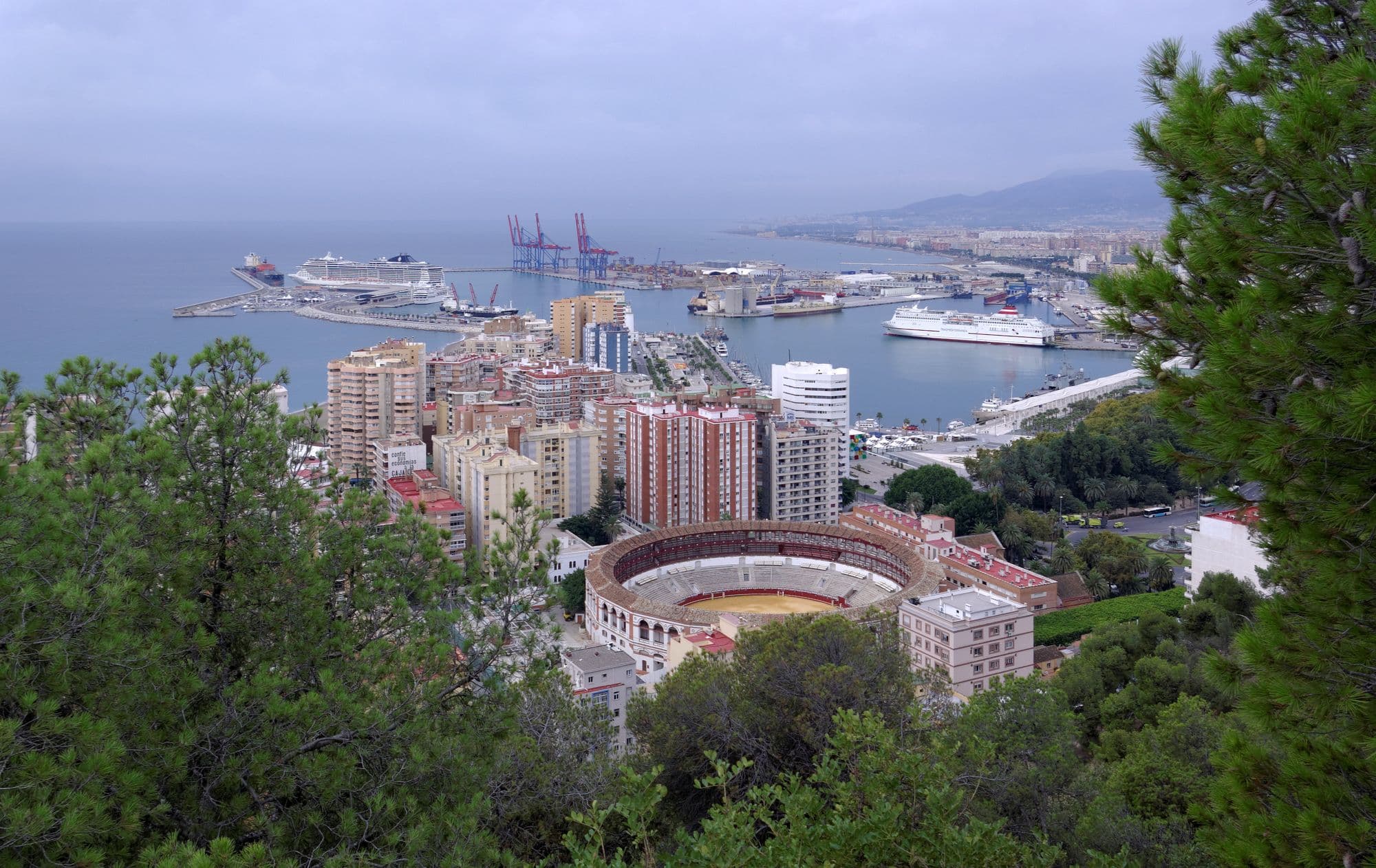
Málaga is a city with beaches, not a resort with a city attached. The council describes its fifteen as urban beaches with a wide range of services, joined by promenades made for walking. For small coves and cliffs, the day trip is Nerja. Getting around Málaga has the fares and timetables for every bus and train mentioned here.
The city beaches at a glance
West to east, with the council’s lengths. The last column is the extra lifeguard cover in Holy Week and at weekends in spring and late September; every beach has lifeguards in high season.
| Beach | Council zone | Length | Spring and late-September lifeguards |
|---|---|---|---|
| Campo de Golf | Churriana (far west) | 2,250 m | No |
| Guadalmar | Churriana (far west) | see below | Yes |
| Sacaba | La Paz (west) | 750 m | No |
| La Misericordia | La Paz (west) | 2,000 m | Yes |
| San Andrés | La Paz (west) | 650 m | Yes |
| La Malagueta | Malagueta (centre) | 1,200 m | Yes |
| La Caleta | Malagueta (centre) | 1,000 m | Yes |
| Baños del Carmen | El Palo (east) | 550 m | No |
| Pedregalejo | El Palo (east) | see below | Yes |
| El Palo | El Palo (east) | 1,200 m | Yes |
| El Dedo | El Palo (east) | 550 m | Yes |
| El Candado | El Palo (east) | 200 m | No |
| Peñón del Cuervo | El Palo (east) | see below | No |
| Fábrica de Cemento | El Palo (east) | 350 m | No |
| La Araña | El Palo (east) | 500 m | No |
The council’s pages for Pedregalejo, Peñón del Cuervo and Guadalmar each give two different lengths, so they’re left out.
1. La Malagueta: the city beach by the centre
La Malagueta is the urban beach closest to the historic centre, and the council counts it among the city’s best known. It’s about 1.2 km long, the water is calm, and the promenade behind it has a varied choice of places to eat and water sports. The council lists toilets (with a baby-changing space), showers, sunshade and lounger hire, food and a children’s play area, and in 2026 it was one of three beaches where staff help people with reduced mobility into the water.
2. La Caleta: the next one along
La Caleta runs between La Malagueta and Baños del Carmen and takes its name from the neighbourhood behind it, where Málaga’s wealthy built villas and small palaces in the late 19th century. It’s 1 km long and 25 m wide on average, and stays busy, the council says, because it’s easy to reach and close to the centre. It has sunshade and lounger hire, food, a play area and, in 2026, an accessible bathing point equipped for independent use.
3. Baños del Carmen: the old spa beach
Baños del Carmen belonged to the Balneario del Carmen, a seaside spa that opened in 1918 and once had a jetty, tennis courts, a football pitch, a restaurant, a 2,000 m² dance floor and even an aquarium. A rehabilitation plan is in progress. The beach is 550 m long but only 15 m wide, with views across the bay of Málaga, and has parking. Come for the view and the history rather than room to spread out.
4. Pedregalejo: fish restaurants on the oldest promenade
Pedregalejo is one of Málaga’s oldest fishing quarters. Its beach has the city’s oldest promenade, which the council says is known for its many fish and seafood restaurants. It was once a pebble beach; breakwaters have since regenerated it completely. It has one of the city’s three toilets for people with ostomies, and EMT bus 34 runs here from Avenida de Andalucía. For a swim and a long lunch, it’s the best of the city beaches; where to eat in Málaga has the restaurants.
5. El Palo and El Dedo: boats on the sand
El Palo runs from Pedregalejo to the Arroyo Gálica, 1.2 km of beach where fishermen still keep the boats they work from, with a sports area and a play area. EMT lines 3 and 11 run from the Alameda Principal to El Palo.
El Dedo, also called Playa del Chanquete, carries on to the El Candado marina. It’s 550 m long, the council calls it a family beach, and in 2026 it was one of the three assisted-bathing beaches. On it stands El Tintero, one of the best-known beach bars on the Málaga coast, the council says, for serving its fish as a kind of auction.
6. The far east: El Candado, Peñón del Cuervo, Fábrica de Cemento and La Araña
El Candado is a 200 m strip named after the 1960s housing estate whose sailing club and marina, the council says, are among the oldest on the Málaga coast. Marina users keep it busy.
Peñón del Cuervo is split in two by a rock formation. Concerts and moragas are held here, and it has an area set up for barbecues. It’s also a protected site for the siempreviva malagueña, an endangered plant, so keep to the sand.
Fábrica de Cemento is a 350 m strip, about 15 m wide at most, in front of Málaga’s cement works, which have operated since 1915.
La Araña, the city’s easternmost district, is a fishing quarter where boats and gear on the sand are a usual sight, and the council says it’s known for the fish at its beach bars and restaurants. The beach is 500 m long, with showers but no toilets listed. At its far end, about 600 m between the Totalán stream and the start of Rincón de la Victoria’s promenade is the city’s dog beach.
7. The west side: San Andrés, La Misericordia and Sacaba
San Andrés lies between La Misericordia and the port: 650 m long, 50 m wide and busy, the council says, because of its wide promenade. EMT line 1 runs here from the Alameda Principal.
La Misericordia, about 2 km long and 30 m wide, is one of the city’s most popular beaches, and chimneys from 19th-century industrial Málaga still stand on its promenade. It has a play area and, in 2026, assisted bathing.
Sacaba runs from the mouth of the Guadalhorce to La Misericordia: 750 m long, 60 m wide, and one of the quietest beaches on the west side, surrounded by a former industrial area.
On a busy day, the west side is the better bet for space: Sacaba is 60 m wide and San Andrés 50 m, against 25 m at La Caleta. For a base near any of these beaches, see where to stay in Málaga.
8. Guadalmar and Campo de Golf: the edge of the city
Guadalmar is the city beach closest to the airport. It runs from the golf course to the mouth of the Guadalhorce, built up over time from the river’s sediment, and the council calls it the only urban beach with a nudist area. EMT line 5 runs here from the Alameda Principal.
Campo de Golf, named after the golf course beside it, is the westernmost beach in the municipality: semi-urban, little used and surrounded by vegetation. At 2,250 m long and up to 50 m wide, the council calls it Málaga’s largest beach, with room for a football pitch and a barbecue area.
Lifeguards, flags and rules on the city beaches
Lifeguards. Málaga’s high beach season began on 15 June 2026, when the lifeguard service, until then weekends only, went daily: 10am to 8pm until 15 September, from the Torremolinos border to La Araña. The council’s standing schedule adds Holy Week, weekends from Holy Week to 15 June and weekends from 15 to 30 September, 11am to 7pm, at eight beaches: Guadalmar, La Misericordia, San Andrés, La Malagueta, La Caleta, Pedregalejo, El Palo and El Dedo.
Out of season
The schedule has no lifeguards between October and Holy Week. If you swim then, nobody is watching.
Flags and jellyfish. The council’s free app, Málaga Funciona, shows which flag is flying each day. The Infomedusa app reports jellyfish on the city’s beaches.
Dogs. Article 15.1 of the city’s beach ordinance bans pets from the water and bathing areas, and in summer 2026 the Local Police paid particular attention to loose dogs. The dog beach at La Araña, by the Totalán stream, isn’t a designated bathing area; dogs over 20 kg must wear a muzzle, and owners must carry the dog’s papers.
Moragas. A moraga, the traditional beach get-together, needs a permit, requested two days ahead on playas.malaga.eu or at any district office (Junta de Distrito). Gas bottles, flammable liquids and camping are banned on the beaches, and soap is banned in the showers.
Accessibility. In 2026 the Disfruta la playa programme had staff-assisted bathing at La Misericordia, La Malagueta and El Dedo, and points with equipment for independent use at Guadalmar, San Andrés, La Caleta, Pedregalejo and El Palo, booked on playas.malaga.eu. The beaches have 47 public toilets in 27 blocks.
9. Torremolinos: four beaches, five C1 stops
Torremolinos has four beaches along seven kilometres of coast. The C1 stops five times in the town, the tourism website says: at Torremolinos station, on the central square of La Nogalera, and at El Pinillo, Montemar Alto, La Colina and Los Álamos.
La Carihuela is two kilometres long, in a neighbourhood that keeps its fishing tradition. Grace Kelly, Ava Gardner, Orson Welles and Frank Sinatra came here in the 1950s and 60s, the tourism site says. Come for the fried fish. Walk west to reach the small beach of Saltillo, then Benalmádena’s Puerto Marina. In summer 2026 the town marked zones with currents and set lifelines at points along La Carihuela: take them seriously.
El Bajondillo is 1 km long and 40 m wide, practically in the centre, between La Carihuela and Playamar, with dark sand, a moderate swell and lifeguards. Two lifts save the climb: the town’s, from Plaza del Panorama (Calle de las Mercedes) down to Plaza de los Tajillos, open all year, and the Meliá hotel’s, normally summer only and closed at lunchtime; both cost 50 cents a journey (October 2026). El Morro, a natural monument, stands at one end.
Playamar is 1 km long and about 50 m wide, reached on foot along Avenida Benyamina, with beach volleyball and windsurfing.
Los Álamos, on the border with Málaga, is the furthest beach from the town centre: more than 1.5 km long and 60 m wide, with beach clubs playing music through the day and part of the night, and jet skis, pedalos and jet boats. Take the train to La Colina or Los Álamos.
In 2026 the town’s lifeguards worked daily from 1 June to 30 September, 11am to 8pm, with cover at Holy Week and weekends before that.
10. Benalmádena
Benalmádena’s tourism site lists two C1 stations: Benalmádena-Arroyo de la Miel, the main one, underground and connected to the town centre, and Torremuelle, in Benalmádena Costa near the beach of the same name. Check the walk to your beach on a map before you go.
- Bil Bil, known for the Castillo El Bil Bil, has 400 m of fine sand, about 60 m wide, along the promenade, a family atmosphere and lifeguards, a kilometre from the marina.
- Arroyo de la Miel beach, next to Bil Bil, is 300 m long and about 80 m wide, with calm water and a sandy bottom.
- Santa Ana, a few metres from the castle, is more than 500 m long, with restaurants serving fish, seafood and international food.
- Malapesquera, 500 m long, has palms for shade, showers, toilets, loungers and drinking fountains, and a rock shelf two metres from the shore for looking at marine life.
- Torrebermeja has direct access to Puerto Marina and shallow water, which makes it a good pick for small children, plus staff to help with bathing.
- Benalnatura, 100 m long and reached by stone stairs, is the town’s only naturist beach, with a nudist beach bar.
- Carvajal, on the Benalmádena side, is almost 500 m long at the border with Fuengirola, with two rock outcrops at its western end.
11. Fuengirola: the end of the line
Fuengirola has seven kilometres of coast in four big beaches, and four C1 stations: Fuengirola, in the centre, Los Boliches, Torreblanca and Carvajal.
- Carvajal, on the Fuengirola side, is 1,200 m of fine golden-brown sand, with calm water and easy access from the promenade.
- Los Boliches-Las Gaviotas is three kilometres of fine golden sand and calm water, with pedal boats for hire and a family atmosphere.
- Playa Fuengirola is 1,650 m long, calm and family-friendly, with pedal boats, exercise equipment and trampolines.
- El Castillo, Calle Tartesios s/n, lies beside the Castillo Sohail: 800 m long, with a moderate swell, showers, toilets and lifeguards, and one of the first dog beaches in the province, fenced with latched gates.
For calm water and small children, Fuengirola is the easiest train day from Málaga.
12. Nerja and Maro
Alsa runs buses between Málaga and Nerja every day; getting around Málaga has the times and fares. The council names eight beaches in the municipality: Maro, Burriana, Carabeo, Calahonda, El Salón, Torrecilla, El Chucho and El Playazo. In 2026 they had lifeguards every day from 1 June to Sunday 27 September, until 9pm.
Burriana is the full-service beach: busy, family-oriented and well equipped, says andalucia.org, the regional tourism board. It’s 800 m long and 40 m wide, with dark sand, calm water, loungers, sunshades and sports equipment for hire, beach bars and a play area. Nerja renewed its accessible bathing equipment in 2026.
Maro, in Nerja’s municipality, looks wild, with vegetation in a natural setting, andalucia.org says. The water is calm, and there are lifeguards, public toilets and shade. Choose it if you came for the scenery.
The others:
- Calahonda sits in a very enclosed cove with a pedestrian promenade.
- El Salón is a small urban beach set in a cliff, with a few palms.
- Carabeo is a very small cove reached on foot by a staircase between large boulders.
- La Torrecilla is a small, busy urban beach with a promenade, calm water and lifeguards.
- El Chucho is 280 m of dark sand from the ruins of a watchtower to the mouth of the Río Chillar. Wear water shoes for the rocks at the water’s edge, and snorkel round the tower for small octopus and fish.
- El Playazo is long, wide and rarely crowded, away from the town, with some services and, from 2026, an accessible bathing point.
How to choose
- A swim between museums? La Malagueta, or La Caleta.
- A swim, then fish for lunch? Pedregalejo, or El Dedo for El Tintero.
- Room on a summer weekend? La Misericordia, Sacaba or San Andrés.
- Small children? Torrebermeja, or any of Fuengirola’s calm beaches.
- Naturist? Guadalmar’s nudist area, or Benalnatura.
- Beach clubs and music? Los Álamos.
- Scenery worth a day? Maro, or Nerja’s coves.
- With a dog? La Araña, or Fuengirola’s El Castillo.
What to skip
- La Malagueta or La Caleta on a July or August afternoon. The council’s busiest times are July and August, noon to 3pm and 5pm to 7pm. Go in the morning, or go west.
- Los Álamos, if you want quiet. The beach clubs play music through the day and into the night.
- Fábrica de Cemento as a destination. It’s a narrow strip in front of a working cement plant; La Araña and Peñón del Cuervo are better reasons to come east.
- Bare feet at El Chucho. Bring water shoes.
- A sunbed you don’t need. Spain’s coastal law makes the shore free and open to all for walking, spending time and bathing, so a towel is enough.
A few things worth knowing
- Jellyfish and weever fish. In summer 2026, Torremolinos’s lifeguards treated 93 jellyfish stings and 58 weever fish stings. Málaga council’s advice for a jellyfish sting: rinse with seawater, never fresh water; don’t rub it, even with a towel or sand; don’t use ammonia, urine or vinegar; apply cold for about 15 minutes. Don’t touch dead jellyfish: they can sting for up to 24 hours when dry.
- Flags. In Torremolinos the sea-state flags gained colour-blind-friendly markings in 2026.
- No soap. Torremolinos asks you to keep it out of the showers and the sea, as Málaga does in its showers.
Questions
What is the best beach in Málaga city?
For a swim near the sights, La Malagueta, closest to the historic centre. For fish for lunch, Pedregalejo. For space, La Misericordia or Sacaba.
When are there lifeguards on Málaga’s beaches?
In 2026, every day from 15 June to 15 September, 10am to 8pm, on all fifteen city beaches. Eight beaches also have lifeguards in Holy Week and at weekends until 15 June and from 15 to 30 September, 11am to 7pm. Between October and Holy Week there are none.
Which beaches can you reach by train from Málaga?
The C1 runs from Málaga Centro-Alameda to Fuengirola. Get off at La Colina or Los Álamos for Los Álamos beach, at Torremolinos for the town centre, at Benalmádena-Arroyo de la Miel or Torremuelle for Benalmádena, and at Carvajal, Torreblanca, Los Boliches or Fuengirola for Fuengirola.
Are dogs allowed on Málaga’s beaches?
Not on the city’s bathing beaches: the beach ordinance bans pets from the water and bathing areas. The dog beach is at La Araña, by the Totalán stream, where dogs over 20 kg must wear a muzzle. Fuengirola has a fenced dog beach at El Castillo.
Is Nerja worth a day trip for the beaches?
Yes, for a different coast. Alsa runs buses from Málaga every day. Burriana has the most services, and Maro is the scenic choice. In 2026 Nerja’s beaches had lifeguards from 1 June to 27 September.
Places in this guide
All of MálagaWhere to eat in Málaga
- El Tintero Restaurant
Things to do in Málaga
- Nerja Day trip
- La Malagueta Beach · La Malagueta and the port
- La Caleta Beach
- Pedregalejo Beach · Pedregalejo and El Palo
- El Dedo Beach
- Fuengirola Day trip
- Torremolinos Day trip
- Benalmádena Day trip
- Burriana Beach
- Maro Beach
- La Araña Beach
- El Castillo Beach
- Campo de Golf Beach
- Guadalmar Beach
- Sacaba Beach
- La Misericordia Beach
- San Andrés Beach
- Baños del Carmen Beach
- El Palo Beach · Pedregalejo and El Palo
- El Candado Beach
- Peñón del Cuervo Beach
- Los Álamos Beach
- La Carihuela Beach
- El Bajondillo Beach
- Playamar Beach
- Arroyo de la Miel Beach
- Bil Bil Beach
- Santa Ana Beach
- Malapesquera Beach
- Torrebermeja Beach
- Benalnatura Beach
- Carvajal Beach
- Los Boliches-Las Gaviotas Beach
- Playa Fuengirola Beach
- Carabeo Beach
- Calahonda Beach
- El Salón Beach
- El Chucho Beach
- El Playazo Beach
- La Torrecilla Beach
- SkipFábrica de Cemento Beach
marks a Citorah Pick.
Plan the trip
Some of these are affiliate links: if you book through them, Citorah may earn a commission, at no extra cost to you. It never changes what the guides recommend. How Citorah is paid
About this guide
Written by Jordan Gilbert, who edits Citorah. Last checked . Prices, hours and timetables change, so check anything you’re booking against the operator’s own site. Something wrong or out of date? Tell us, or email hello@citorah.com.